
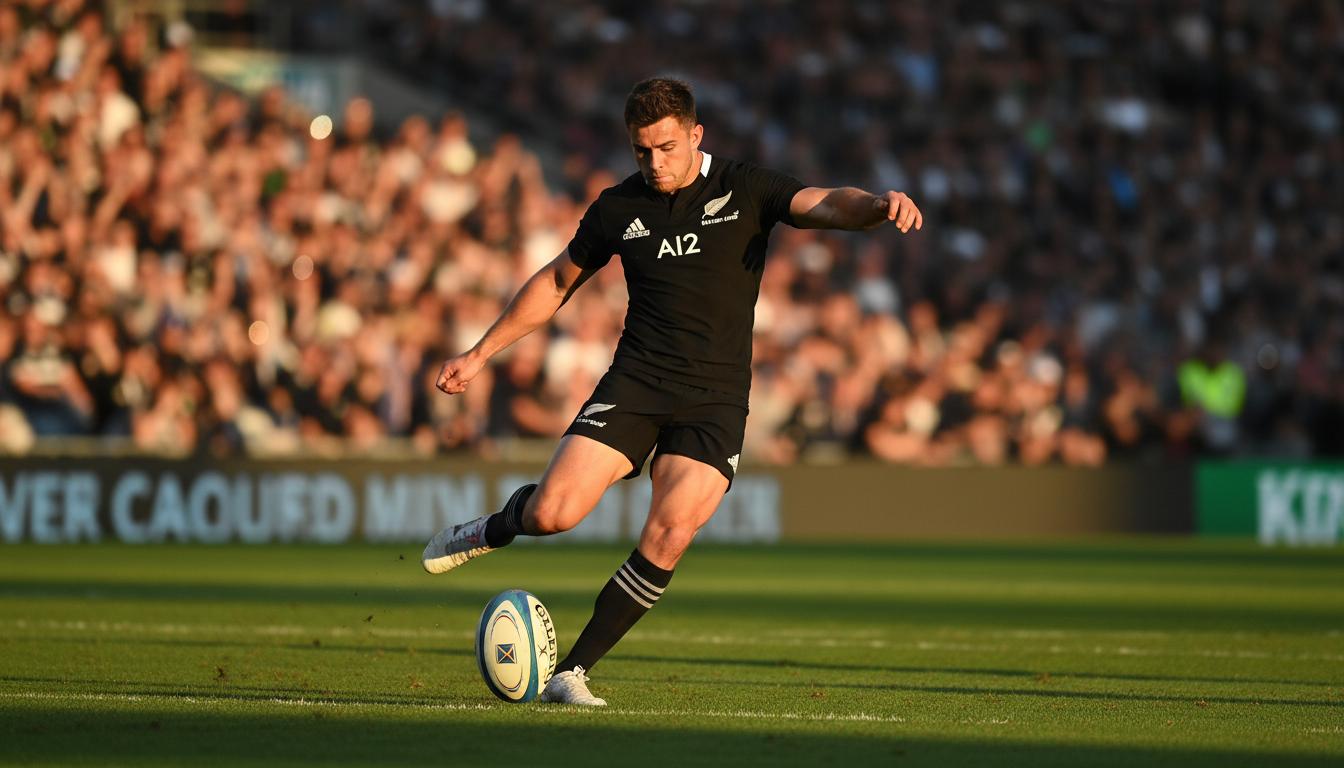
Big boot. Bigger presence. jordie barrett has become the All Blacks’ go-to connector between muscle and magic — the player who can kick you out of trouble one minute and punch a hole through the line the next. This guide breaks down who he is, how his game works, where he fits best, and what fans in Aotearoa should know to follow him with confidence.
What is
Jordie Barrett is a New Zealand rugby union player for the All Blacks and the Hurricanes. He is best known for playing second five-eighth (12) and fullback (15), with the ability to cover centre (13) and even first five-eighth (10) when needed. He’s part of the renowned Barrett rugby family from Taranaki, alongside brothers Beauden and Scott.
Barrett is a tall, powerful back with rare versatility. He combines long-range goal-kicking, accurate tactical kicking, and hard-nosed defence with soft hands and clear decision-making. Since his All Blacks debut in 2017, he has become a mainstay in New Zealand’s midfield and backfield options.
Domestically, he represents the Hurricanes in Super Rugby Pacific and Taranaki in the NPC. Internationally, he has featured at Rugby World Cups and in annual Rugby Championship and Bledisloe Cup clashes. In 2024, he confirmed a short-term sabbatical stint in Europe with Leinster for the 2024–25 season, before returning to New Zealand rugby.
How it works
The Barrett blueprint: size, skill, and game control
Jordie Barrett’s game works because he blends playmaker smarts with a lock’s frame. That mix lets coaches use him as a second first-five at 12 or as a commanding backfield general at 15. He shifts between roles without losing impact.
Attack
- Second distributor: At 12, he gives teams two genuine decision-makers. He can play short runners, hit the edge, or drop a kick in behind defensive lines.
- Gain-line punch: His carry often gets front-foot ball. Defenders commit, which opens space for wings and fullbacks.
- Kicking threats: From chips to cross-kicks to 50:22 attempts, Barrett’s range forces backfields to sit deeper, creating room for his outside backs.
- Support lines: He is excellent trailing breaks, either as a passing link or a strong finisher.
Defence
- Tackling presence: He tackles high-volume carriers and halts momentum close to the ruck channel at 12.
- Aerial security: Under high balls he is reliable, which is why coaches trust him at 15 in kick-heavy tests.
- Organising voice: Barrett marshals the backline, sets the line speed, and communicates numbers on edges.
Restarts and set-piece
- Long-range penalties: He can land goals from beyond 50 metres, turning penalties into points from almost anywhere.
- Exits and territory: His booming touch-finders and clearances relieve pressure and flip field position quickly.
- Kick-offs: Deep, contestable restarts let his forwards compete while keeping territory safe.
Types / examples
The roles Jordie Barrett plays
Coaches pick jordie barrett for specific jobs. These are the common role types and how they look on the field.
| Role/Position | Primary Job | Best Use Case | Key Benefits | Trade-offs |
|---|---|---|---|---|
| Second five-eighth (12) | Second playmaker, gain-line pressure, defensive anchor | Against rush defences; when team needs two kickers and a strong midfield tackler | Dual-kicking game; short-passing variety; midfield size; structure | Less sweeping coverage than a specialist 12 focused purely on carrying |
| Fullback (15) | Aerial control, last-line defence, long kicking | Kick-dominant tests; wet or windy conditions; territory battles | High-ball security; long exits; counter-attack options | Removes him from the immediate midfield picture |
| Centre (13) | Edge defence, line breaks, link play | When injuries hit or a bigger defensive 13 is required | Strong tackling on the edge; direct running lines | Less natural there than 12/15; more specialist reads required |
| Goal-kicker | Primary or secondary shot-taker | When range matters or to share load with the 10 | 50m+ range; late-game composure | Workload management; conditions affect long-range attempts |
Examples of usage
- All Blacks at 12: Dual playmakers (10 and Barrett) to unlock rush D with variety in short passes and kicks.
- All Blacks at 15: Backfield boss in tactical arm-wrestles, catching high balls and drilling touch-finders.
- Hurricanes: Slotting between 12 and 15 depending on injuries, tactics, and opposition kicking threats.
Pros and cons
What makes jordie barrett special
- Versatility at test level without a drop in quality.
- Elite kicking range for territory and points.
- Physicality in contact, especially at 12.
- Calm decision-making and leadership presence.
- Aerial authority under pressure.
Trade-offs to consider
- Shifting positions can disrupt combinations if done too often.
- At 15, you lose his immediate midfield defence and short-passing variety.
- At 12, you trade some sweeping backfield coverage for midfield stability.
- Goal-kicking workload needs balance with playmaking duties.
How to use or choose
Picking Jordie Barrett’s best position for your lineup
Coaches and fans often debate whether he should wear 12 or 15. Use this simple process to decide for a given opponent and venue.
- Map the opposition: Do they kick a lot or rush hard in defence? Note weather and ground size.
- Check your 10: If your first-five is a running threat but light on tactical kicking, lean Barrett at 12.
- Assess your back three: If your wings are young under the high ball, consider him at 15 for stability.
- Balance the midfield: Facing big carriers? Use him at 12 to stiffen the channel and win collisions.
- Plan set-piece exits: In a territory slog, 15 gives you deeper kicking options and safer cover.
- Share kicking duties: If your 10 has the tee, Barrett can focus on playmaking; if not, weigh his goal-kicking load.
- Lock combinations: Decide early so 9–10–12–15 reps bed in during the week.
Scenarios
- Windy test in Wellington: Start at 15 to command the backfield and exits.
- Dry track, rush defence: Start at 12 with planned short-kick variations and screen plays.
- Injury cover mid-game: Shift from 12 to 15 to stabilise the high ball without burning a sub.
How New Zealand fans can watch jordie barrett
- All Blacks and Super Rugby Pacific: Sky Sport NZ holds broadcast and streaming rights (Sky Box, Sky Go, and Sky Sport Now).
- Free-to-air highlights: Prime typically carries highlights and occasional delayed coverage.
- Live at the ground: Hurricanes home matches are at Sky Stadium, Wellington; NPC fixtures with Taranaki vary across the province.
- Overseas stint: For his short-term Leinster spell (2024–25), coverage in NZ is commonly available through Sky Sport when rights permit for European club matches.
FAQ
Is Jordie Barrett a fullback or a second five-eighth?
Both. He made his name at fullback but has become a first-choice 12 for the All Blacks. Coaches switch him depending on tactics and squad balance.
Why do the All Blacks like him at 12?
At second five-eighth he gives New Zealand two playmakers, adds size in midfield defence, and offers an extra long-kicking option to control territory.
How good is his goal-kicking?
Strong. jordie barrett is trusted from long range, often beyond 50 metres, and can share or take primary duties depending on the first-five.
Which teams does he play for?
The All Blacks, the Hurricanes in Super Rugby Pacific, and Taranaki in the NPC. He has also taken a short-term sabbatical with Leinster for 2024–25.
What makes his kicking game different?
Range and variety. He can hit long touch-finders, land 50:22 kicks, and use cross-kicks or chips to exploit condensed defences.
How tall and heavy is he?
He is notably tall and powerful for a back, which helps in contact and under the high ball. That size underpins his role at 12 and 15.
Is he related to Beauden and Scott Barrett?
Yes. They are brothers who have all played for the All Blacks, each in different positions — a rare family achievement at test level.
What boots or gear does he use?
He uses professional-grade boots suited to kicking and stability. Specific brand choices change over time with sponsorship and personal preference.
Has he played first five-eighth (10)?
Occasionally. He can cover 10 in a pinch, but his primary roles for New Zealand are 12 and 15.
Deep dive: comparing Jordie Barrett’s positions
When people search for “jordie barrett best position,” the real answer depends on opposition style, weather, and the balance of New Zealand’s 10 and back three. Use this quick comparison to settle debates on selection night.
| Attribute | 12 (Second five-eighth) | 15 (Fullback) | 13 (Centre) |
|---|---|---|---|
| Territory control | Good (short kicks, dual playmaking) | Excellent (deep exits, counter-kicks) | Moderate |
| Midfield defence | Excellent (size and tackle volume) | Moderate (last-line focus) | Good (edge reads) |
| Aerial security | Good | Excellent | Good |
| Ball-carry threat | High (direct carries, offloads) | Moderate (counter-attack lanes) | High (outside breaks) |
| Combination value | Creates dual 10 setup with first-five | Stabilises young wings and kick receipts | Links 12 to wings |
| Goal-kicking load | Share or primary as needed | Share or primary as needed | Occasional |
Key takeaways for New Zealand fans
- At test level, jordie barrett is most influential as a dual playmaker at 12 or a territory general at 15.
- His long kicking, aerial presence, and physicality make him a selection lever coaches can pull to change a match’s shape.
- Where he starts should match the game plan: rush-defence solutions point to 12; kick-heavy arm-wrestles point to 15.
- He remains a cornerstone for the All Blacks, the Hurricanes, and Taranaki — with a brief European chapter to broaden experience.
Summary
Jordie Barrett is the rare back who changes matches with both brain and brawn. Slot him at 12 and you unlock a second first-five with a battering ram’s shoulders. Put him at 15 and you get aerial calm and a cannon of a boot when the wind howls off the harbour. That blend, plus reliable goal-kicking and leadership, explains why New Zealand trusts him when the stakes rise. For fans at home, that means one simple thing: wherever he lines up, the All Blacks’ plan widens — and the field feels just a little smaller for everyone else.