
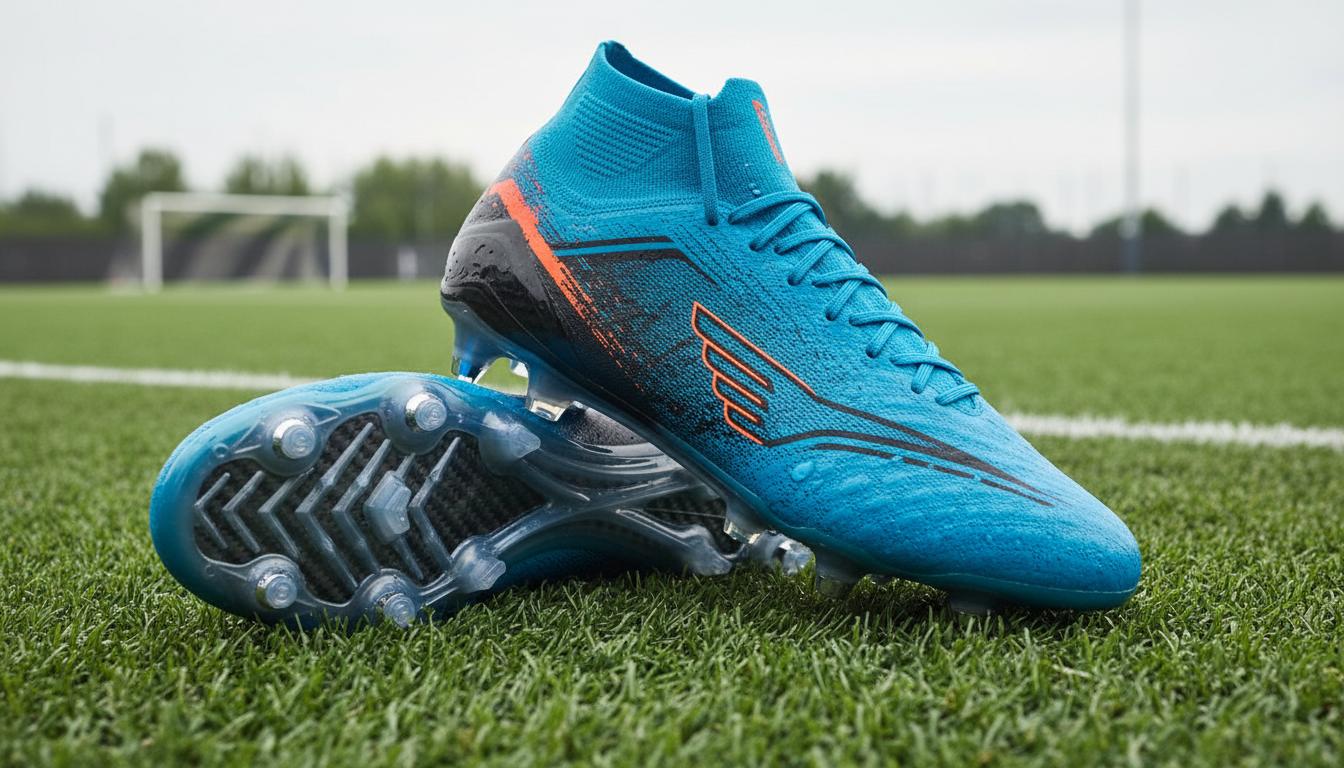
New Zealand football throws everything at your feet: rain-soaked council fields in winter, rock-hard grounds in late summer, and fast artificial turf under the lights. The right football boots can sharpen your first touch, keep you upright on greasy grass, and save your calves from working overtime. This guide explains what football boots are, how they work, which types suit Kiwi conditions, and how to choose a pair that fits your feet and your fixtures.
What is
Football boots are purpose-built shoes designed for playing association football. They balance traction, touch, stability, and comfort across different surfaces like natural grass, artificial turf, and indoor courts.
Key parts of a football boot
- Upper: The material around your foot that shapes touch and comfort. Can be leather, synthetic, or knit.
- Outsole and stud plate: The bottom unit that houses studs or rubber patterns for grip.
- Studs: Fixed or screw-in elements that bite into the surface.
- Insole and midsole: Cushioning layers that affect comfort and underfoot feel.
- Heel counter: Adds stability and reduces heel slip.
- Lacing and collar: Secure the fit and support the ankle area.
Each piece influences ball control, traction, and how the shoe feels during 90 minutes.
How it works
Football boots improve your connection with the ground and the ball. Design choices change the way force travels through your foot, how you accelerate, and how the ball responds to your touch.
- Traction: Stud shape, length, and layout decide how deeply boots bite and how easily you release the ground when turning.
- Stability: A firm plate, heel counter, and supportive upper stop your foot sliding around inside the boot.
- Touch: Thinner, supple uppers enhance feel; textured zones can add grip for passing and striking.
- Energy transfer: Stiffer forefoot plates snap you forward when sprinting; too stiff can feel harsh on hard grounds.
- Fit: A secure lockdown prevents blisters and reduces wasted energy from foot movement.
On soft, wet grass common in NZ’s winter season (roughly April–September), longer or fewer studs penetrate better, limiting slips. On artificial turf, many small, shorter studs spread pressure and reduce stud bite that can stress joints.
Types / examples
By playing surface
- FG (Firm Ground): Conical or bladed studs for natural grass in good condition. Works on most late-spring to early-autumn grass in NZ.
- SG (Soft Ground): Longer, often metal screw-in studs for muddy or soft fields after heavy rain.
- AG or MG (Artificial/Multi Ground): Many short, hollow or conical studs designed for 3G/4G artificial turf.
- TF (Turf): Rubber-studded outsole for older, shallow turf or very hard, dry grounds.
- IC (Indoor Court/Futsal): Flat, non-marking sole for wooden or synthetic indoor courts.
Comparison by surface and typical NZ conditions
| Boot type | Stud pattern | Best surface | NZ use case | Main advantages | Watch-outs |
|---|---|---|---|---|---|
| FG (Firm Ground) | 10–14 medium studs, conical/bladed | Natural grass, firm to slightly soft | Weekend club matches on maintained grass, late spring to early autumn | Versatile, stable edge grip, good for most players | Can be slippery on saturated fields; wears faster on artificial turf |
| SG (Soft Ground) | 6–8 longer studs, often metal screw-ins | Wet, muddy grass | Mid-winter fixtures on heavy council fields after rain | Deep penetration, strong traction in mud | Not for turf; may be too aggressive on firmer ground |
| AG/MG (Artificial/Multi) | Many short studs, sometimes hollow | Modern artificial turf (3G/4G) | Evening trainings and matches on Auckland, Wellington, Christchurch turf pitches | Even pressure, durable on turf, reduces stud lock | Less bite on wet natural grass |
| TF (Turf) | Dense rubber nubs | Older turf, hard ground | School grounds or summer sevens on baked surfaces | Comfortable, stable, multi-use | Limited traction on lush grass |
| IC (Indoor) | Flat, patterned rubber | Indoor courts | Futsal and indoor training | Great grip indoors, low-profile touch | Unsafe outdoors on wet grass |
By upper material
- Leather: Natural feel, stretches for shape, soft touch. Needs care in wet weather; can absorb water.
- Synthetic microfiber: Thin, light, stable in rain, keeps shape longer. Touch varies by model.
- Knit hybrids: Sock-like wrap with coatings for durability and grip. Comfort-focused, structure depends on internal cages.
By fit and cut
- Low-cut: Maximum ankle freedom, common for wingers and full-backs.
- Mid/high-collar: Extra wrap and perceived support; true ankle stability still depends on overall structure.
- Foot shape options: Some lines run narrow; others suit wide forefoots. Try multiple lasts to match your shape.
NZ-specific examples
- Winter on soft grass: Consider SG or FG with longer, conical studs for safer release in mud.
- Turf-heavy schedule: AG or MG outsoles extend lifespan and comfort.
- Mixed week: One AG/MG pair can cover turf trainings and many grass matches; add SG for stormy weekends.
- Futsal season: Use IC court shoes; they protect the surface and give the right grip indoors.
Pros and cons
Benefits of well-chosen football boots
- Better traction reduces slips, especially in wet NZ winters.
- Improved first touch and striking feel.
- More efficient movement and less foot fatigue.
- Lower blister risk with correct fit and sock pairing.
Trade-offs to consider
- Traction vs release: Aggressive blades can grip hard; conicals release smoother when cutting.
- Feel vs protection: Thinner uppers improve touch but cushion less against studs and knocks.
- Durability vs weight: Ultra-light models may wear quicker on turf or hard grounds.
- Versatility vs specialisation: One pair can do most jobs, but a second pair (AG or SG) often pays off across NZ’s variable conditions.
How to use or choose
Step-by-step: choosing football boots that fit your game
- Map your surfaces: List where you train and play (grass, turf, indoor). Prioritise the surface you use most.
- Pick the right outsole: FG for good grass, SG for muddy winters, AG/MG for turf, IC for futsal, TF for hard grounds.
- Match your foot shape: Try multiple brands and lasts. Aim for snug midfoot/heel and light toe room (about a thumbnail).
- Select upper feel: Leather for natural touch and stretch; synthetic for weather resistance and shape retention; knit for comfort.
- Check lockdown: Lace up fully with your match socks. Do cutting and sprinting moves; no heel lift or side slip.
- Mind the rules: Metal studs are commonly allowed in local football if they’re safe and smooth, but always check your league or club.
- Confirm size: Sports footwear in NZ often uses US sizing. Women typically take about 1–1.5 sizes down from men’s US sizing, but try on to be sure.
- Balance budget: Mid-tier models often share plates with top-end pairs and deliver strong value.
- Plan for weather: If you play through winter, consider a second pair (SG or AG) to cover heavy rain and turf nights.
- Break-in smart: Short sessions first, then matches once hotspots disappear.
Fitting and break-in tips
- Try boots late in the day when feet are slightly swollen, closer to match conditions.
- Wear the socks and shinguards you use on game day.
- If leather, expect minor stretch; synthetics change less, so start closer to final fit.
- Use heel-lock lacing if your heel slips.
Care and maintenance
- After muddy games, brush off dirt and wipe with a damp cloth. Avoid soaking.
- Dry naturally, away from heaters or direct sun. Stuff with newspaper to draw moisture.
- For leather, use a suitable conditioner sparingly to keep it supple.
- Check studs before matches; replace worn screw-ins and tighten safely.
- Rotate pairs if you play multiple times a week to extend lifespan.
- Do not use SG metal studs on artificial turf—they can damage the surface and feel unstable.
FAQ
Are metal studs allowed in New Zealand competitions?
Many local leagues allow metal studs if they’re safe, smooth, and not sharp. Referees can refuse a player whose studs are unsafe. Check your competition rules before buying SG football boots.
Can I wear FG boots on artificial turf?
You can, but they may wear faster and can feel “sticky,” increasing joint stress. AG or MG football boots are more comfortable and last longer on turf. If you must use FG on turf, choose circular studs over aggressive blades and inspect the outsole regularly.
What’s the difference between football boots and rugby boots?
Rugby boots may have extra heel studs, a wider base, and heavier construction for scrummaging and rucking. Football boots are lighter with stud patterns tuned for quick cuts and constant ball contact. For football, avoid rugby-specific stud layouts; they can feel clumsy and may not provide the right traction pattern.
How should football boots fit?
Close and secure with minimal heel movement, snug midfoot wrap, and roughly a thumbnail of toe clearance. Too long causes slipping and blisters; too tight can numb toes and increase injury risk.
Do I need top-tier, professional models?
Not necessarily. Mid-tier football boots often use the same plate and a slightly heavier upper, offering excellent performance for less. Prioritise the right outsole and fit over headline materials.
Which studs are best for NZ’s wet winter?
On muddy grass, SG with screw-in studs grips best. If your grounds are only slightly soft, an FG with longer conical studs can be safer than aggressive blades because they release more predictably.
How do I stop my boots smelling?
Dry them fully after each session, use moisture-wicking socks, and remove insoles to air out. A pinch of baking soda overnight helps. Avoid sealing wet boots in your bag.
When should I replace football boots?
If the outsole cracks, studs wear down unevenly, the upper tears at stress points, or you feel new pressure pain, it’s time. Frequent turf use accelerates wear, so inspect plates and stud tips regularly.
Can I buy replacement studs in NZ?
Yes. Most sports stores and online retailers in New Zealand stock screw-in studs and wrenches. Match the thread type and length recommended for your boot plate.
Are laceless boots a good idea?
They offer a clean strike zone and quick entry, but fit tolerance is narrow. If your foot shape matches the last perfectly, they can work well. If you need micro-adjustments, laces give better lockdown.
Leather or synthetic for New Zealand weather?
Leather feels great and adapts to your foot, but needs more care in constant rain. Modern synthetics keep shape in wet conditions and dry faster. If you play through winter downpours, synthetic or treated leather uppers are practical choices.
Quick material comparison
| Material | Touch | Weather response | Fit behavior | Durability notes |
|---|---|---|---|---|
| Leather | Natural, plush | Can absorb water without treatment | Stretches slightly to shape | Needs regular care; avoid drying heat |
| Synthetic microfiber | Thin, precise (varies) | Stable in rain | Holds shape, minimal stretch | Resists scuffs; watch for plate wear on turf |
| Knit hybrid | Soft, sock-like | Relies on coatings for weatherproofing | Comfortable wrap; structure from cages | Keep coatings clean for longevity |
Final word
Match your football boots to your surfaces, fit them snugly, and look after them. For most players in New Zealand, a two-boot setup—AG/MG for turf and trainings, plus FG or SG for grass—covers the year cleanly. Choose comfort and traction first; the rest of your game will thank you.