
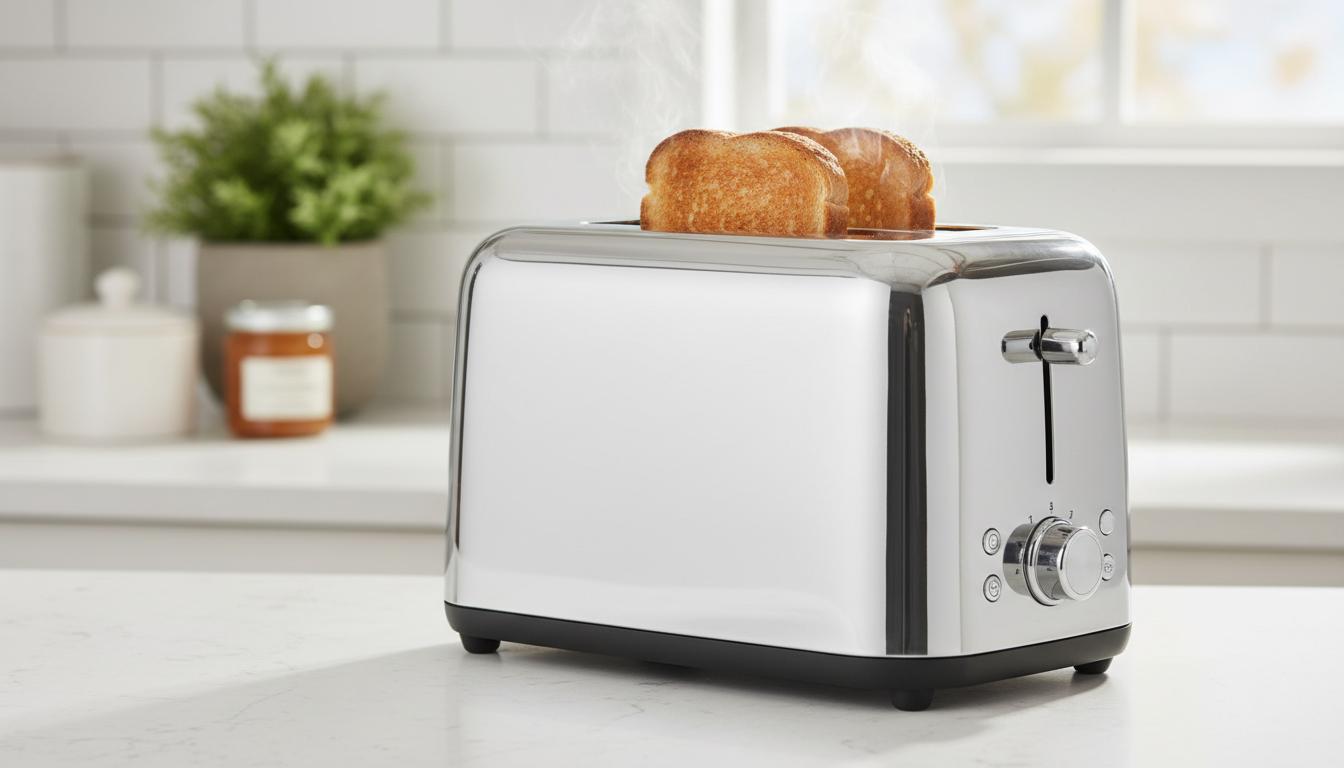
Most Kiwi mornings run on toast. Whether it’s Vogel’s with butter, sourdough from the farmers’ market, or gluten-free slices from the supermarket, a good toaster turns rushed breakfasts into something dependable. This guide explains what a toaster is, how it works, the types sold in New Zealand, the real pros and cons, and exactly how to choose and use one safely at home.
What is
A toaster is a small kitchen appliance that browns bread using radiant heat. Pop-up models hold slices vertically and release them when done; toaster ovens toast horizontally and can also bake and grill. In New Zealand, toasters run on 230–240V, 50Hz power and use a Type I plug that fits standard NZ sockets.
For most homes, a 2-slice toaster handles daily toast. Larger households often prefer a 4-slice toaster or a long-slot toaster that fits wide artisan bread.
How it works
Inside a toaster, resistive heating elements (often nichrome wire) glow red-hot when electricity flows through them. The heat radiates onto the bread’s surface, driving off moisture and triggering the Maillard reaction, which creates that golden colour and toasty flavour.
- Browning control: Adjusts run time or sensor threshold, affecting how dark your toast gets.
- Thermostat or sensor: Some models use a simple timer; others use thermistors or optical sensors to adjust for bread temperature and moisture.
- Electromagnet latch: Holds the carriage down during toasting and releases it when the cycle ends, making the toast pop up.
- Bagel setting: Powers the inner elements more than the outer to crisp the cut side while warming the crust.
- Defrost function: Extends the cycle so frozen bread thaws and toasts evenly.
- Crumb tray: Catches crumbs so they don’t burn. It should slide out for cleaning.
Typical wattage ranges from about 800–1100W for a 2-slice toaster and 1600–2000W for a 4-slice toaster. At NZ power prices (roughly $0.25–$0.40 per kWh), a single toasting cycle usually costs around 1–4 cents.
Types / examples
2-slice toaster
Compact and quick. Ideal for flats, singles, or couples. Look for wide-slot toasters if you like thick-cut bread or bagels.
4-slice toaster
Great for families. Some have independent controls for each pair of slots, so one person’s sourdough doesn’t hold up someone else’s crumpets.
Long-slot toaster
Uses two long slots instead of four short ones. Fits long slices of artisan bread from a local bakery, baguette pieces, or ciabatta without trimming.
Toaster oven
Looks like a mini oven. It toasts, bakes, grills, and reheats leftovers without firing up a full-size oven. Slower than a pop-up toaster but more versatile for cheese toasties, hash browns, or small bakes.
Smart or feature-rich toaster
Extras can include a countdown timer, touchscreen, lift-and-look, keep warm, and one-sided toasting for bagels. Retro toaster designs and stainless-steel toasters are popular in NZ kitchens.
Common features to consider
- Wide slots for thick bread and bagels
- Browning control with clear markings
- High-lift lever for safely retrieving small slices
- Cancel button to stop mid-cycle
- Defrost and reheat functions
- Bagel setting (inner-side heating)
- Removable crumb tray
- Cool-touch sides and cord storage
- Countdown timer or progress indicator
Quick comparison of toaster types
| Type | Best for | Capacity | Typical Wattage | Bench Space | Typical NZ Price | Pros | Cons |
|---|---|---|---|---|---|---|---|
| 2-slice pop-up toaster | Singles, couples | 2 slices | 800–1100W | Small | $30–$150 | Fast, compact, affordable | Limited capacity |
| 4-slice pop-up toaster | Families, flats | 4 slices | 1600–2000W | Medium | $60–$250+ | Feeds more people, often dual controls | Takes more space |
| Long-slot toaster | Artisan/long loaves | 2 long slots (up to 4 standard slices) | 1200–1800W | Medium | $80–$280+ | Handles odd shapes without trimming | May toast slightly less evenly at the ends |
| Toaster oven | Versatility seekers | 2–6 slices (rack) | 1000–2000W | Larger | $99–$450+ | Toast plus bake/grill/reheat | Slower toast, needs more cleaning |
Pros and cons
Pop-up toaster
- Pros: Quick results, low running cost, simple controls, compact footprint.
- Cons: Limited to bread-like items; uneven results on very irregular slices; tall or extra-wide bread may not fit without a long-slot or wide-slot toaster.
Toaster oven
- Pros: Handles toast, bagels, cheese melts, pies, and small bakes; good for small kitchens without a full oven.
- Cons: Slower and less even for basic toast than a good pop-up toaster; bigger to clean; warmer bench area in summer.
Energy and cost
- A typical 2-slice toaster cycle uses about 0.03–0.05 kWh (roughly 1–2 cents at common NZ rates).
- A 4-slice cycle might use 0.06–0.10 kWh (about 2–4 cents).
- Toaster ovens draw similar power but run longer; they cost more per toasting session but offer flexibility.
How to use or choose
How to use a toaster safely (step-by-step)
- Place the toaster on a stable, heat-resistant bench with clear space around it.
- Check the removable crumb tray is empty and fitted correctly.
- Set the browning control lower than you think for the first run.
- Insert bread evenly in the slots. Use wide slots for thick slices or bagels.
- Select functions as needed: defrost for frozen bread, bagel for one-sided toasting, reheat for cooling toast.
- Start the cycle and stay nearby. Use lift-and-look if available instead of popping mid-cycle.
- When it pops, use the high-lift lever to raise small pieces. Avoid metal utensils in the slots.
- Unplug and cool before cleaning. Slide out the crumb tray and wipe the exterior with a damp cloth.
How to choose the best toaster for NZ homes
- Capacity and slots: 2-slice toaster for 1–2 people; 4-slice or long-slot toaster for families or artisan loaves.
- Evenness: Look for consistent browning across the slice. Reviews and tests help; check edges and centres for uniform colour.
- Wattage: Higher wattage toasters generally toast faster. Aim for ~1000W (2-slice) or ~1800W (4-slice) if speed matters.
- Features: Bagel setting, defrost function, reheat, cancel button, countdown timer, high-lift lever, lift-and-look, and a removable crumb tray are genuinely useful.
- Slot design: Wide-slot toasters fit thick bread; long-slot toasters fit long bakery slices without trimming.
- Build quality: Stainless-steel toasters resist staining and feel solid. Retro toasters and colourful finishes add style but check durability and warranty.
- Footprint and cord: Measure your bench space. Cord storage is handy in smaller kitchens or flats.
- Safety: Cool-touch sides, non-slip feet, and an auto shut-off help prevent mishaps. In NZ, look for the RCM mark and compliance with AS/NZS safety standards.
- Brand and support: Well-supported brands in NZ include Breville, Sunbeam, Russell Hobbs, De’Longhi, Smeg, and KitchenAid. Check local service and spare parts.
- Price and value: Budget ($30–$60) covers basics; mid-range ($80–$150) adds features and better evenness; premium ($200–$500+) focuses on design and durability.
- Where to buy: Common retailers include Briscoes, Noel Leeming, The Warehouse, Farmers, Mighty Ape, and Harvey Norman. Sales are frequent—watch for weekend deals.
- Consumer rights: The Consumer Guarantees Act (CGA) protects you if a toaster is not of acceptable quality. Keep receipts and register warranties.
Care and maintenance tips
- Empty the crumb tray weekly to prevent burning smells and reduce fire risk.
- Wipe the exterior with a soft cloth. Avoid harsh cleaners on painted or retro finishes.
- Never immerse the toaster in water. Unplug before cleaning.
- Store away from steam (e.g., not directly under a kettle) to protect electronics.
- If the toaster trips the RCD or smells of burning, unplug and have it checked. Look up recalls at recalls.govt.nz.
FAQ
What toaster wattage is best?
For quick, even results, aim for around 1000W in a 2-slice toaster and 1600–2000W in a 4-slice toaster. Higher wattage shortens toast time but also draws more power while running.
What does the bagel setting do?
Bagel mode reduces heat on the outer elements and increases it on the inner ones, so the cut side crisps while the crust side warms without over-browning.
Can I toast frozen bread?
Yes. Use the defrost function if available. It adds time to thaw the bread before browning, helping avoid a pale centre and burnt edges.
How do I clean a toaster properly?
Unplug and let it cool. Slide out the crumb tray, tip out crumbs, and wash the tray if removable. Gently shake out loose crumbs over the sink. Wipe the exterior with a damp cloth and dry.
Is a toaster oven better than a toaster?
For plain toast, a pop-up toaster is faster and more even. A toaster oven is better if you want to grill cheese, bake small items, or reheat slices without drying them out.
Why does my toaster toast unevenly?
Causes include narrow slots, uneven element spacing, or moisture differences between slices. Try a middle browning setting and use bread of similar thickness. If it’s still patchy, the elements may be wearing out.
What size toaster fits sourdough or Vogel’s?
A long-slot toaster handles long bakery slices and wide loaves without trimming. Wide slots help with thick-cut sourdough and bagels.
How long should a toaster last?
With normal use and regular crumb-tray cleaning, many toasters last 3–7 years. Premium models can run longer. The CGA may assist if a product fails earlier than reasonably expected.
Are NZ toasters different from overseas models?
They use 230–240V, 50Hz power and a Type I plug complying with AS/NZS standards. If importing, ensure the voltage and plug match NZ requirements.
What safety features matter most?
A cool-touch body, auto shut-off, high-lift lever, stable feet, and a reliable cancel button. Keep the toaster clear of curtains and paper towels, and never insert metal utensils into the slots.
Bottom line
The best toaster for a New Zealand kitchen fits your bread, your bench, and your morning rhythm. Decide on capacity first, then look for even toasting, a solid build, and useful features like a bagel setting, defrost function, high-lift, and a removable crumb tray. With a sensible wattage and a trustworthy brand, you’ll get consistent toast for just a few cents a day—and fewer arguments over who got the burnt slice.